I Love You, I’m Proud of You, I’m Sorry: Three Phrases Every Asian Parent Should Learn to Say
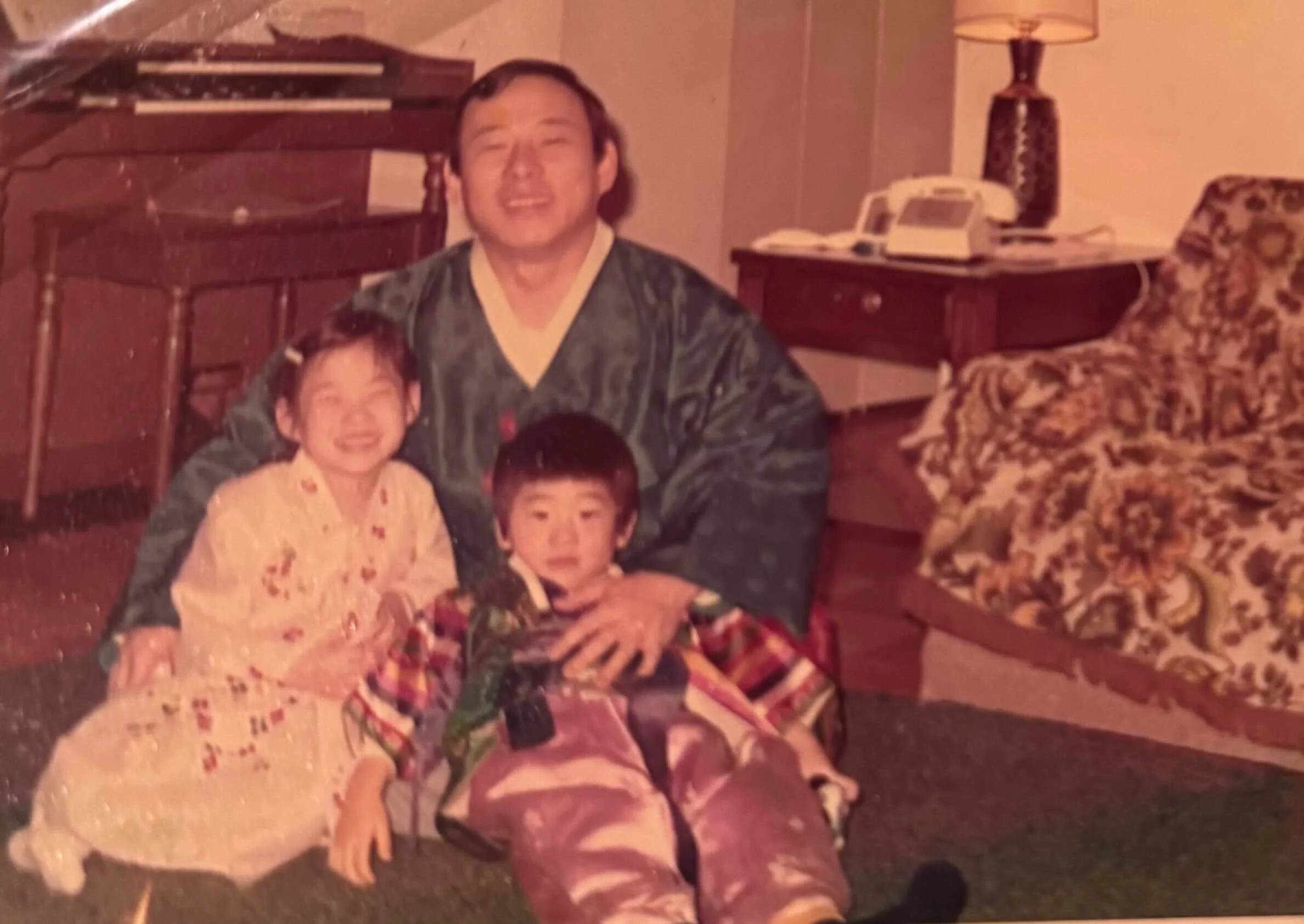
The older I get the more I have come to love my Korean heritage and culture. I appreciate the expressions of mutual respect toward one another, and the honor that we extend toward those older and more senior. I love the untranslatable Korean concepts of Han, Jung, and Nunchi* that drive many of my relationships and my unique social super powers. I find it both humorous and affirming that the rest of the world have become so curious about the Korean language, music, art, and culture, and seek to learn more.
But I confess that I have not always loved our culture. Attributed mostly to the racism and bullying I experienced as a child, I struggled with my ethnic and cultural identity. There was a time when I hated other Koreans. I hated the culture. I hated the language. I hated myself. Being born in the US I struggled with expectations of being Korean: getting in trouble for not showing enough deference in how I bowed in my greetings, the lack of honorifics applied in how I addressed seniors, and being too slow in my nunchi to save face for my parents. Culture felt fake, forced, and insincere.
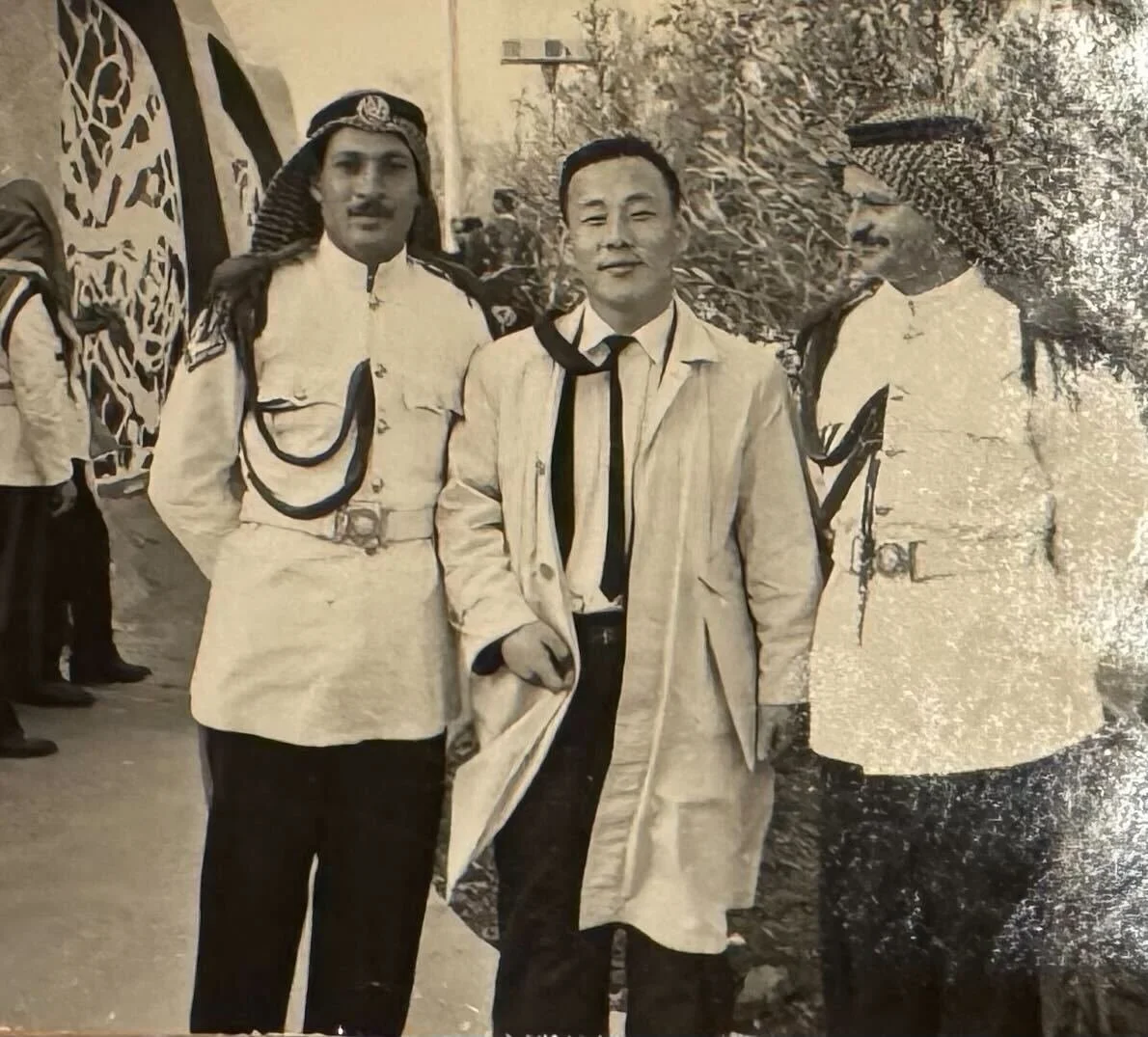
After suffering from bullying by white classmates in school, I suffered even more when I got home. My late father left Korea for Washington DC pre-1965 to cover the White House as a news correspondent for the Chosun Daily News.
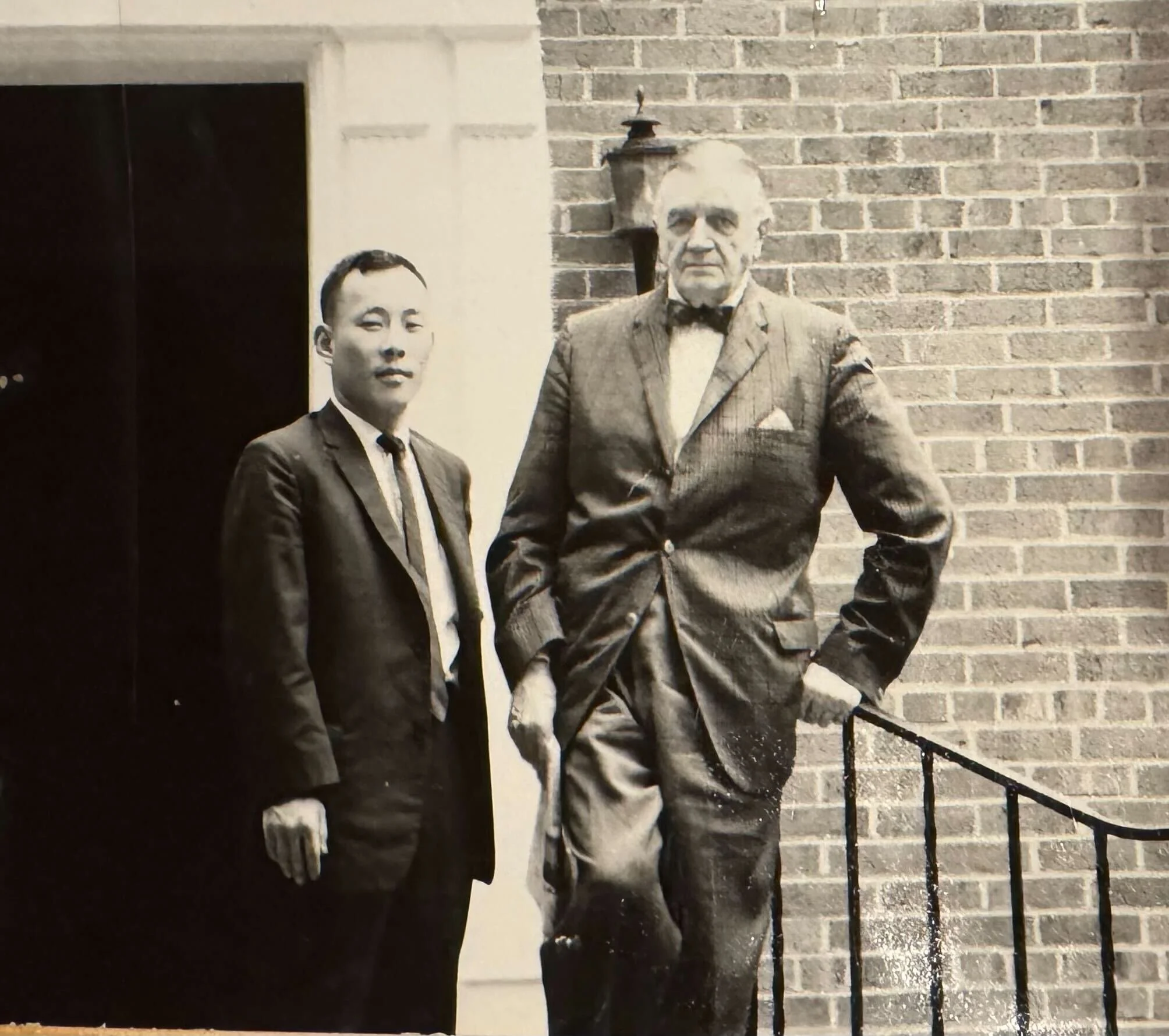
The day he decided to remain in America after his term of service in the foreign press corps, he went from dignitary to dirty immigrant. He struggled for quite a long time trying to provide for the family, and the cumulative effect impacted my father negatively. Like many other immigrants in America, the struggle with language, culture, and racism, left him stressed and depressed. He would come home tired and angry every day. I understand now that he just did not have the bandwidth or capacity to express his love for me in ways that I desperately needed; the kind of verbal and physical expressions of love I had learned primarily through television shows like The Brady Bunch or Family Ties.
So I learned early on to suppress my needs and pretend or perform regularly to be a dutiful son.
I did not meet Jesus until my first year in college. But even after I became a Christian, my understanding of a heavenly father was heavily influenced by my relationship with my earthly father. I imagined my father in heaven to be an angry deity who was looking down on me with disappointment. The concept of a loving father was sometimes hard to grasp. When I read Matthew 3:17 (“this is my son, in whom I love; with him I am well pleased”) I jokingly wondered if Jesus was admitted to Harvard through early action. In all seriousness, I realize how much I struggled to imagine my heavenly father uttering these very words to me. I simply presumed he was always expressionless, like my earthly father, so I needed to perform and work hard to please my God.
I doubt I am alone. Many Asian American adults still long to hear these words from their aging parents, and sometimes still cannot say any of these phrases to their own English speaking children. This longing is something many Asian American adults continue to quietly carry every day, but parents can help repair generational wounds for the sake of their own children.
Learning Three Phrases
I recently spoke at a large Korean speaking immigrant church in southern California. My talks began to lean in on broken child-parent relationships and adult children walking away from their churches and their faith. During a Q&A session, a parent asked if he should study English in order to communicate with his English speaking children. This opened an unscripted moment of reflection and grief over broken relationships, from the parents’ perspectives. I immediately answered the question with a resounding YES. Then I half jokingly held an impromptu English lesson, telling the congregation that what their adult children still long to hear from their aging parents were the following three phrases in English:
I love you.
I am proud of you.
I am sorry.
I said that all parents should repeat any/all of these phrases early and often to their adult children.
Coincidentally, I was missing a men’s retreat at my own home church, where I heard that my pastors were verbally affirming each man individually, speaking truths to every one of the brothers that they are loved, they are accepted, and that they had nothing to prove. With over a hundred men gathered, there was not a dry eye, some even openly wept. I was reminded how much Asian American men have felt unseen and unloved for a very long time.
As stated earlier, there are three concepts that are very difficult to translate from Korean to English: Han, Jung, and Nunchi. Conversely, the three succinct English expressions that are very difficult to translate from English to Korean are “I love you,” “I’m proud of you,” and “I’m sorry.” It’s not just the words themselves, but the expressions that have often felt unreliable for many Asian cultures. For many Asian American adults, the most difficult words to hear from their Christian parents are not some deep theological ideas or spiritual practices. They are these simple phrases: I love you. I’m proud of you. I’m sorry.
These words are short in English, emotionally direct, and relationally vulnerable. Yet for many Korean parents, and especially fathers, they are among the hardest words to express to their children. This difficulty is occasionally misunderstood as emotional coldness or intentional withholding. But for many Asian American parents, these phrases sit at the intersection of Confucian hierarchy, postwar survival, immigration trauma, and a moral imagination shaped by duty and action rather than relational and emotional expression.
Confucian hierarchy privileges respect, obedience, and role fulfillment over emotional disclosure, teaching that love is shown through provision and sacrifice rather than words. Postwar survival further narrowed emotional bandwidth for some immigrant parents, as scarcity and instability required endurance, discipline, and silence as survival techniques. Immigration trauma reinforced this posture, rewarding productivity and resilience while discouraging vulnerability in unfamiliar and often hostile environments. Together, these forces shaped a moral imagination oriented toward duty, action, and achievement.
Where care is expressed through what one does, rather than what one says, it leaves relational and emotional language underdeveloped among parents and children even when love and remorse are deeply felt. What got lost in translation was not love itself, but the language of love as their English-speaking children came to understand it.
“I love you!”
Asian and Asian American culture continues to evolve and verbal and physical expressions are on the rise. Yet for many second and third generation Asian American adults, love had traditionally been exclusively conveyed through provision, sacrifice, and endurance rather than verbal affirmation. Parents showed love by dutifully working long hours, paying for education, putting food on the table, and steering children toward stability. To say “I love you” directly to their own child, may have felt unnecessary, indulgent, or even weakening their children’s resolve. Love, in this framework, is assumed rather than stated.
“I’m proud of you!”
This expression presents another parental challenge. In some older Korean households, praise is believed to invite complacency. Children are encouraged through correction more than celebration. Achievement is acknowledged by raising the standard, not by resting in the moment. To say “I’m proud of you” may almost feel like a concession to mediocrity, as if it signals that striving is complete. “When my children reach their full potential, they will finally understand, and eventually thank us for pushing them so hard rather than coddling them” was one confession I heard recently. Parents may believe they are loving their children by pushing them further, even when the child longs simply to be seen.
“I’m sorry”
This just may be the most difficult phrase of all. In a hierarchical culture where parents are moral authorities, apologizing to a child can feel like a loss of legitimacy. We are a face saving honor shame culture. Therefore many older Asian fathers were never apologized to by their own parents. These lessons were neither taught nor caught. So authority always flowed downward, while obedience flowed upward. Admitting fault risks disrupting that structure. Silence, avoidance, or stoic endurance often replaces apology, even when regret is deeply felt.
The Wounds
I have stated for a while that application of Christian principles from a cultural lens has always led to a truncated application of the Gospel. For English speaking Asian American children of Korean/Mandarin/Khmer/Hindi (and so many more) speaking parents raised in a different emotional economy, silence is not neutral. It is interpretive.
When love is not spoken, children do not assume it; they question it. When pride is not expressed, they internalize inadequacy. When apology is absent, wounds remain unnamed and therefore unhealed.
This increasing chasm has led to parental wounds. A quiet, persistent ache rooted not always in abuse or absence, but in emotional distance. Many Asian American adult children grew up knowing their parents' sacrificial actions, yet also feeling unsure whether they are loved for who they are rather than for what they achieve.
So many Asian American children grew up pretending that we were okay without these affirmations, even though something in our souls had died as a result of missing these words. Parental love and God’s love shared the same root problem: love felt conditional. We became fluent in duty but illiterate in affection. We learn to perform, excel, achieve, and endure, but struggle to rest, receive, or believe we are enough. This translated to how we relate to God: most of us have struggled with trying to “earn” God’s approval by dutifully serving Him, rather than being able to rest in the father’s love for us.
Love exists on both sides, but the tragedy is that it was lost in translation. Parents love deeply but express it indirectly. Children crave to be loved deeply by simple expressions of that love. We are conditioned not to ask for it. Sometimes we begin looking for love in all the wrong places and the results are always devastating to both the body and the soul. Sometimes we bury it, thinking that if we never acknowledge it then it will never surface. Except it leaks out sometimes horribly into the very family members and children that we say we love most.
Generational trauma is passed down both silently and violently like a family heirloom no one ever wanted. Translation matters because words must be conveyed in a cultural context that the person receiving the love can understand.
All these unresolved father wounds have leaked into Asian American church culture, with devastating effects of spiritual abuse and perpetual generational harm. From my own personal experience as a church leader, I have seen how pastors with unhealed parent wounds have unwittingly hurt their families, their leaders, and their congregations. Because we usually repeat what we don’t repair, our unhealed wounds can have devastating consequences in ministry.
For Asian Christian parents raising children in an English-speaking, emotionally expressive culture, learning to say “I love you,” “I’m proud of you,” and “I’m sorry” is not a betrayal of tradition. It is the beginning of a good spiritual practice. A rule of life. It is an act of courage. It is a willingness to cross borders, it is to be missional, to model vulnerability, and to heal what they themselves were never given a chance to heal.
For Asian American adult children, even if your parents have not been able to say the words you longed to hear, try to listen for the language of love through their acts of service and sacrifice. Learn to receive and rest in the love of your Heavenly Father. You do not have to do anything to earn the Father’s love. You are fully known and fully beloved by Him.
*Han (한) is a Korean word loosely translated as deep sorrow, anguish, and deeply collective pain. It is not just individual pain, but collective, not situational but generational, and han can occur over time.
Jeong (정) is the defining characteristic of Korean relationships. It refers to a deep, enduring emotional bond formed through shared time and experience. Jeong is a blend of affection, empathy, loyalty, and mutual respect that grows quietly and organically over time.
Nunchi (눈치) may best be described as a critical social and emotional awareness that allows a person to read a room. The concept relies on one’s presence to perceive unspoken cues, relational dynamics, and the feelings of others. One’s nunchi helps an individual to respond appropriately for the sake of harmony and respect, prioritizing collective well-being over individual expression.
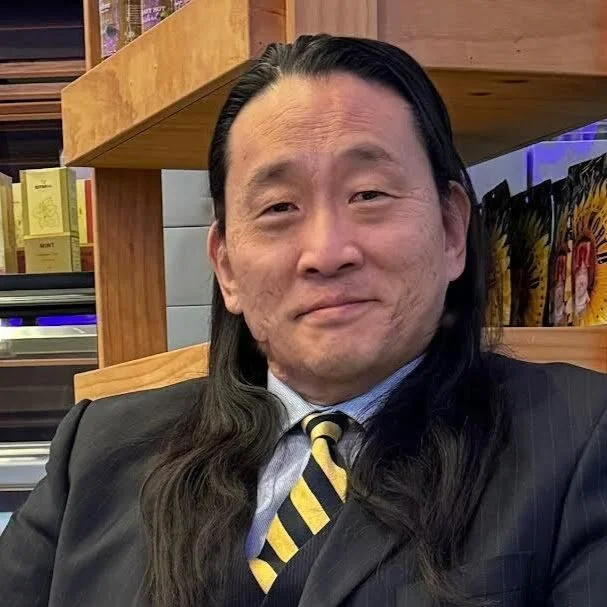
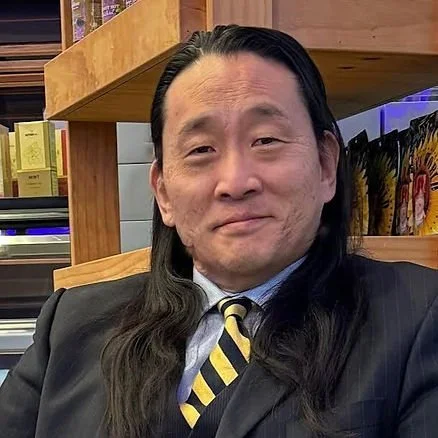
Alexander Jun
Alex is Co-Founder and Chief of Strategic Partnerships for Khora. He also serves as Director of Intercultural Development at Serge and Research Professor of Korean American Ministry and Church Leadership Studies at Fuller Theological Seminary. He is the author of multiple books and articles. His forthcoming book is entitled, Sabbath God: Gospel for Korean America.