Learning to Lead in the In-Between

I didn’t grow up thinking I would one day be working in refugee advocacy at the global level, engaging with policy conversations connected to the United Nations. In many ways, the work I’m doing now feels like something I stumbled into—and yet, when I look back, I can see how each step quietly led me here.
Today, I serve as a refugee advocacy research fellow with the World Evangelical Alliance, where I focus on mobilizing the global church to respond to forced displacement and helping amplify refugee voices in international spaces. My work sits at an intersection I deeply care about: faith, policy, and people.
But the roots of this work go back much further.
When Awareness Becomes a Calling
I remember the moment things shifted for me. I was living in Thailand when I first learned about the Rohingya genocide in Myanmar. Entire communities were being displaced, fleeing violence with nowhere to go. I felt overwhelmed—grieved, even—but also helpless. I didn’t know what I could do.
That tension stayed with me.
It began shaping the classes I chose in college, and eventually led me to pursue a master’s in international development and humanitarian emergencies at the London School of Economics. At the time, I thought I was simply studying a global issue. I didn’t yet realize I was stepping into a calling.
Bridging Two Worlds
One of the deepest desires I carried into my studies was this: I didn’t want to stay in theory. I wanted to bridge the gap between academic knowledge and real-world practice.
Now, that’s exactly what I find myself doing.
Much of my work involves translation—not just across languages, but across worlds. I translate what churches and frontline responders are doing into policy language that institutions like the United Nations can understand. And I translate policies back into something accessible for the communities they impact.
It’s not always easy. But I’ve come to see that this kind of “in-between” work matters deeply.
Because at the center of all of it are people.
Seeing What Others Miss
Growing up across cultures shaped how I move through the world. I learned early on that every culture carries something valuable, even if I don’t fully understand it.
Now, when I walk into a room—whether it’s a high-level meeting or a small gathering—I instinctively scan the space.
Who is speaking?
Whose voices carry weight?
Who might be overlooked?
Sometimes leadership looks like stepping forward. But often, I’ve found it looks like making space.
As an Asian American woman early in my career, I’ve also experienced what it feels like to be underestimated or overlooked. There are moments when people don’t immediately recognize my role or authority—especially when I’m convening meetings.
But instead of seeing that only as a limitation, I’ve begun to recognize it as a kind of quiet strength. It allows me to pay attention differently. To notice dynamics others might miss. To create space for voices that might otherwise go unheard.
When Good Intentions Need Refinement
One of my most formative leadership lessons came during a meeting I organized in Korea with leaders from national evangelical alliances—many of whom were serving in regions heavily impacted by refugee crises.
I wanted to create a space where everyone felt equal, seen, and heard. So I structured the meeting in a way that emphasized shared participation.
But afterward, I realized something important: in my effort to flatten hierarchy, I had unintentionally overlooked the importance of honoring it.
Many of the leaders in the room were senior figures—archbishops, pastors, people with decades of experience. In their cultural contexts, titles and roles carry deep meaning. Recognizing that is part of making people feel seen.
I also realized I hadn’t given enough time for people to introduce themselves fully. I had prioritized efficiency, when what the room needed was presence.
If I could do it again, I would slow down. I would make more room for story, for honor, for relationship.
Because sometimes, leadership isn’t about moving things forward—it’s about making space for what matters most.
The Tension of Capacity
One of the biggest challenges I face is discerning what is mine to carry.
The work of refugee advocacy is urgent. The needs are endless. And in an under-resourced environment, it’s easy to feel like you should say yes to everything.
But I’ve learned—often the hard way—that I’m not meant to carry it all.
There was a season where I found myself checking emails in the middle of the night, constantly responding, constantly trying to keep up. And eventually, I had to confront a hard truth: this pace wasn’t sustainable.
Rest isn’t optional. It’s a command.
I’ve been learning to hold my work with open hands—to remember that it ultimately belongs to God. That even while I sleep, He is still at work.
Practically, I’ve started each week by naming three things:
What I am actively responsible for
What I am observing but not leading
What I am intentionally saying no to
It sounds simple, but it has helped me live with greater clarity and peace.
Finding My Voice
Another area of growth for me has been learning to speak up.
Coming from an Asian background, I’m naturally more deferential. If someone asks me to do something, my instinct is to say yes and figure it out.
But working in more Western contexts, I’ve realized that not every suggestion is a directive. There’s often room for dialogue—for questions, for pushback, for collaboration.
I’m still learning how to navigate that space.
Sometimes my stress comes not from the work itself, but from wondering: Am I doing this right? And being afraid to ask.
But I’m learning that asking questions isn’t a sign of weakness—it’s part of leadership.
The Gift of Community and Creativity
To sustain this work, I’ve needed more than just discipline—I’ve needed joy.
Community has been essential. People who remind me that there is beauty in the world, even amidst so much brokenness.
And creativity has been a gift. Painting, writing, making—these aren’t distractions from the work. They are part of how I stay whole within it.
They remind me that I am more than what I produce.
Collaboration Over Competition
If there’s one leadership value I hope to carry with me long-term, it’s this: collaboration over competition.
In many of the spaces I work in, resources are limited. It would be easy to operate מתוך scarcity—to hold tightly to what we have.
But I’ve experienced something different.
I’ve seen leaders share their networks, their wisdom, their encouragement freely. I’ve been on the receiving end of generosity that didn’t need to be given.
And it’s changed how I want to lead.
I want to be someone who builds spacious environments. Who shares openly. Who believes that when one of us flourishes, we all do.
Because ultimately, this work isn’t about any one of us.
It’s about joining what God is already doing in the world—and learning how to do it together.
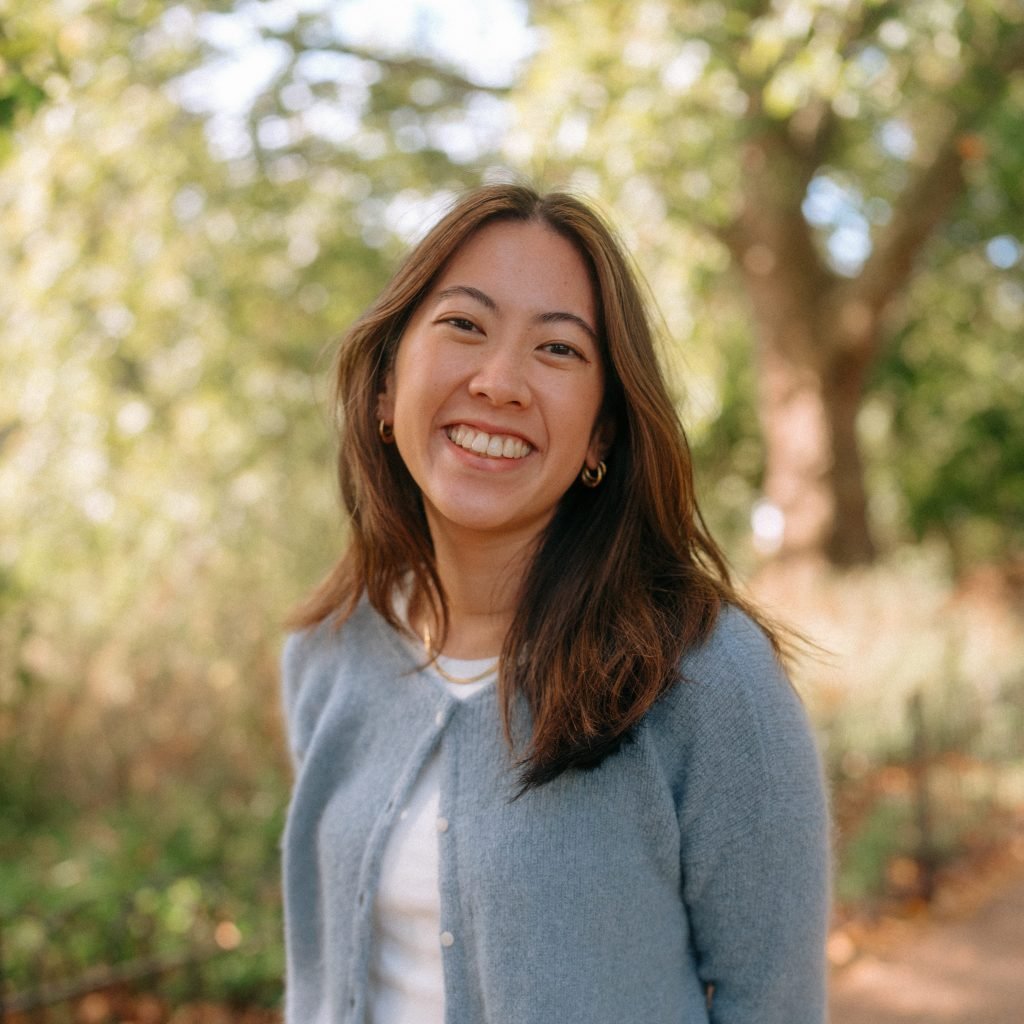
Johanna Chen
Johanna serves as the Refugee Advocacy Fellow with the World Evangelical Alliance (WEA)’s Geneva Office. She has a Masters in International Development and Humanitarian Emergencies from the London School of Economics. Johanna bridges research, policy, and church engagement in her work.