The Weight of a Mother’s Love: An Asian Immigrant Mother’s Journey from Control to Rest

I recently rewatched the Oscar-winning film, Everything Everywhere All at Once, a sci-fi action movie about an aging Chinese immigrant, Evelyn Wang (portrayed by Michelle Yeoh), who runs a laundromat while navigating an IRS audit, until her ordinary life fractures into a multiverse of impossible choices. The movie deals with generational trauma, love for her family, and her complicated relationship with her daughter Joy. What struck me most when I watched the film was the love a mother has for a child, which is both innately strong and beautiful yet can become disordered precisely because it can be so all-consuming. The love of a mother can struggle to loosen its grip, especially for Asian and Asian American “tiger moms.”
In his book, On the Road with Saint Augustine, James. K. A. Smith describes how across cultures and centuries, this tension of a mother’s love appears with striking consistency. Fathers in literature are often depicted as figures to resist or outgrow, but mothers tend to appear as ever-present forces—nurturing, vigilant, and sacrificial. Their love feeds and shelters, but it also watches, weighs, and worries. Perhaps that is why Mother’s Day carries such emotional density. For some, it is gratitude, for others grief, for others still a complicated mix of affection and ache. Maternal love rarely wounds because it is cruel; it wounds because it is heavy. It presses inward. It shapes the soul. The philosopher Albert Camus once wrote, “When my mother’s eyes were not resting on me, I have never been able to look at her without tears springing into my eyes.”
My own mother is still alive and well, and I do not think I carry unresolved maternal wounds, at least none that I am aware of. And yet I find myself deeply resonating with how figures like Augustine and Camus describe the formative weight of their mothers’ love. When Camus died suddenly in a car accident, first responders discovered in his briefcase an unfinished manuscript, Le Premier homme (The First Man). On its cover was a handwritten dedication to his widowed, partially deaf, illiterate mother: “To you, who can never read this book.” It remains one of the most haunting dedications in modern literature, not because it is sentimental, but because it names a quiet tragedy, a love that precedes understanding and outlasts expression. It is this mysterious and conflicting power of a mother’s love—its ability to form, sustain, and also quietly deform—that I want to explore.
When Care Becomes Control and Manipulation
Everything Everywhere All at Once exposes this weight with unusual clarity: “In my universe, you push your own daughter too hard until you broke her. You. You created Jobu Tupaki”—a shattered version of her child who gives her nihilism cosmic form in a void capable of swallowing the multiverse. The accusation leveled against the immigrant Chinese mom, Evelyn Wang, is not that she failed to love her daughter, Joy, but that she loved her without restraint. She pushed Joy relentlessly toward improvement, wholeness, and success, not out of hatred but devotion.
But Evelyn’s instinctive response to the accusation reveals a deeper logic at work: “If I can become like her, maybe I’ll be strong enough to save my Joy.” Even empathy becomes a technique of manipulation and identification becomes a means of mastery. What appears as care quietly hardens into control.
For many Asian American parents, love is expressed through sacrifice, vigilance, and relentless investment in a child’s future. But when reciprocal love from a child is measured primarily by outcomes, such as achievement, stability, respectability, parental care can begin to speak in the language of pressure rather than presence. As a result, the child is no longer simply loved for who they are but tasked with securing meaning for the sacrifices that came before them.
Augustine would have recognized this immediately. In the Confessions, he insists that sin is not first a matter of loving evil things but of loving good things in the wrong order (ordo amoris). The problem is not affection but ultimacy. When a finite good is treated as if it were infinite, it begins to demand what it cannot bear.
Evelyn’s daughter Joy is not crushed by neglect. She is crushed by meaning. She is asked, both implicitly and relentlessly, to justify her mother’s sacrifices, her disappointments, and her unrealized possibilities. Augustine describes this condition as restlessness: a soul deformed under a weight it was never meant to carry. Joy’s nihilism is not adolescent rebellion; it is metaphysical exhaustion. She realizes that when everything matters infinitely, nothing can finally matter at all.
Learning to Release
No maternal figure looms larger in post-biblical, Christian memory than Monica, Augustine’s mother. She loved her son with a fierce, anxious, and persevering love. She followed him across North Africa and Italy. She prayed with tears. Augustine does not minimize this devotion but neither does he sentimentalize it. In the Confessions, Augustine portrays Monica as a woman whose faith was genuine and whose love was real, yet whose anxiety often threatened to eclipse trust. She feared losing her son not merely to vice or error but to distance itself. Augustine notes that Monica could bear God’s silence more easily than her son’s wandering.
What finally satisfies Monica is not Augustine’s moral improvement but his rest in Christ. When Augustine relinquishes his grasp on self-sufficiency—“I was held back by mere trifles, the most paltry of things”—Monica, too, learns to let go. Her love is not extinguished but reordered; it becomes eschatological. She no longer needs to hover, manage, or intervene. Her maternal vigilance gives way to peace. James K. A. Smith rightly emphasizes dependence here. Augustine’s conversion is not simply intellectual or ethical. It is a renunciation of control. Only when Augustine entrusts himself to God can Monica finally entrust him as well. Love that cannot release, Augustine suggests, has not yet learned to trust.
Weakness, Kindness, and the End of Control
The turning point in Everything Everywhere All at Once arrives not through Evelyn’s mastery of the multiverse but through her husband Waymond’s quiet, almost humiliating kindness. He refuses to meet chaos with force. He chooses gentleness where aggression would be easier. “I’m learning to fight like you,” Evelyn confesses to him. This moment is profoundly Augustinian: salvation is not obtained by the force of great power but by love that relinquishes control. Evelyn’s transformation begins when she abandons the fantasy that she can secure Joy’s flourishing through vigilance, correction, or intensity.
What Evelyn slowly and painfully learns is that her daughter's love cannot be the center of her life. When love (for anything other than love for God) is forced to carry the weight of ultimacy, it becomes distorted. It grows sharp, impatient, and fearful. In such conditions, relationships bend inward, narrowing rather than growing.
Rest Beyond the Multiverse
Camus never found Augustine’s God persuasive, but he understood something essential: love often precedes comprehension. It shapes us long before we can interpret it. Without transcendence, however, love remains tragic—sincere, sacrificial, and finally insufficient. Everything Everywhere All at Once never names God, but it circles Augustine’s conclusion with striking honesty. Mothers cannot save their children. Children cannot redeem their parents’ sacrifices. Love must be freed from ultimacy if it is to remain love at all. Augustine’s final word is not despair but rest: “You have made us for yourself, O Lord, and our heart is restless until it rests in you.”
For immigrant mothers, this rest does not mean loving less but loving without the burden of rescue, where they release their children from the task of justifying sacrifice or securing meaning. It looks like entrusting what they cannot control to God and discovering that their children are gifts to be received, not futures to be managed. Until that rest is found, even the fiercest love, especially a mother’s love, can become heavy enough to wound. And yet, when love learns to let go, even a few specks of time are enough.
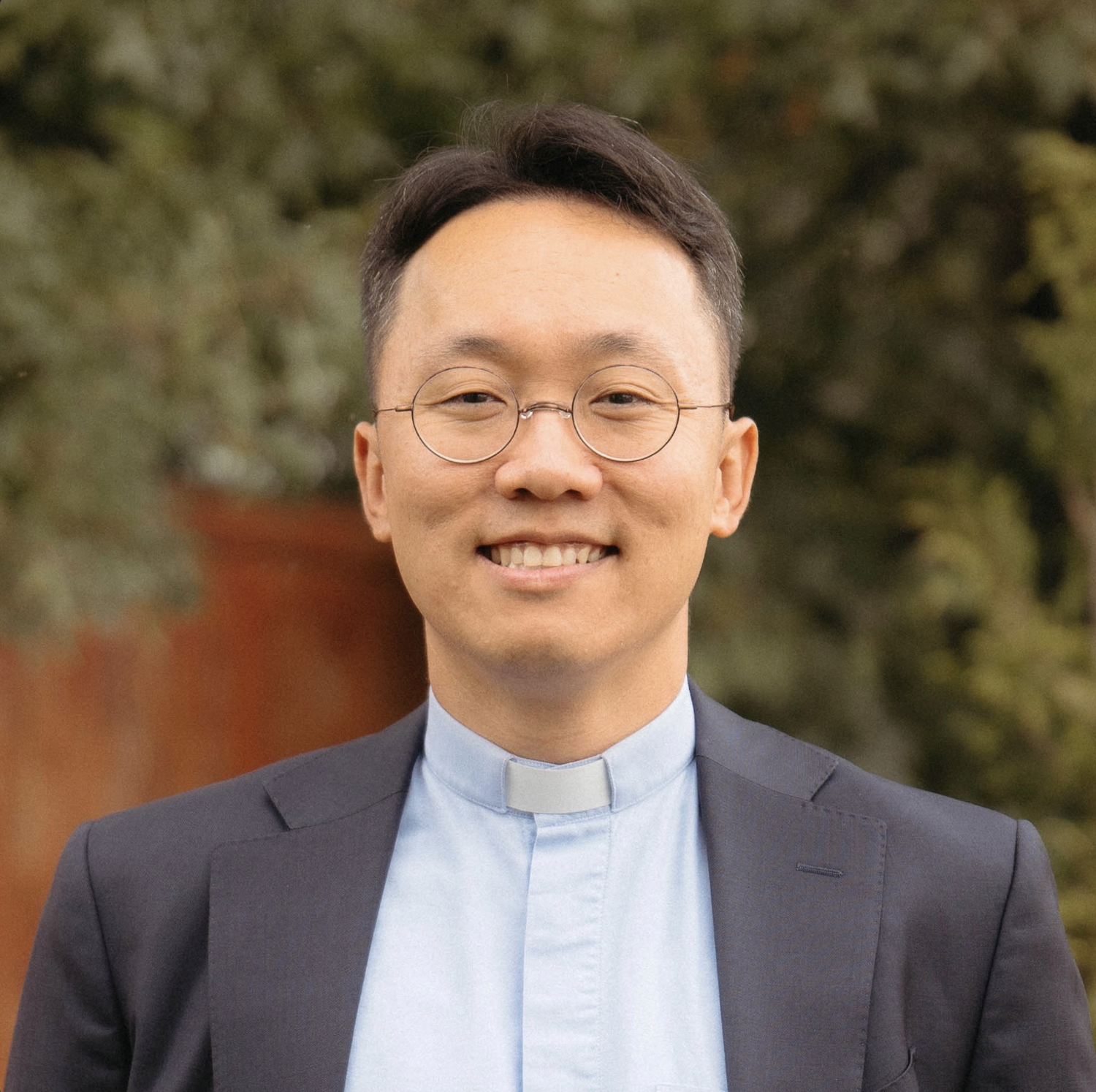
Moses Y. Lee
Moses Y. Lee is the lead pastor of Rosebrook Presbyterian Church in Rockville, Maryland, and a PhD student at the University of Edinburgh, where he is conducting research on Herman Bavinck, J.H. Bavinck, and Harvie Conn.