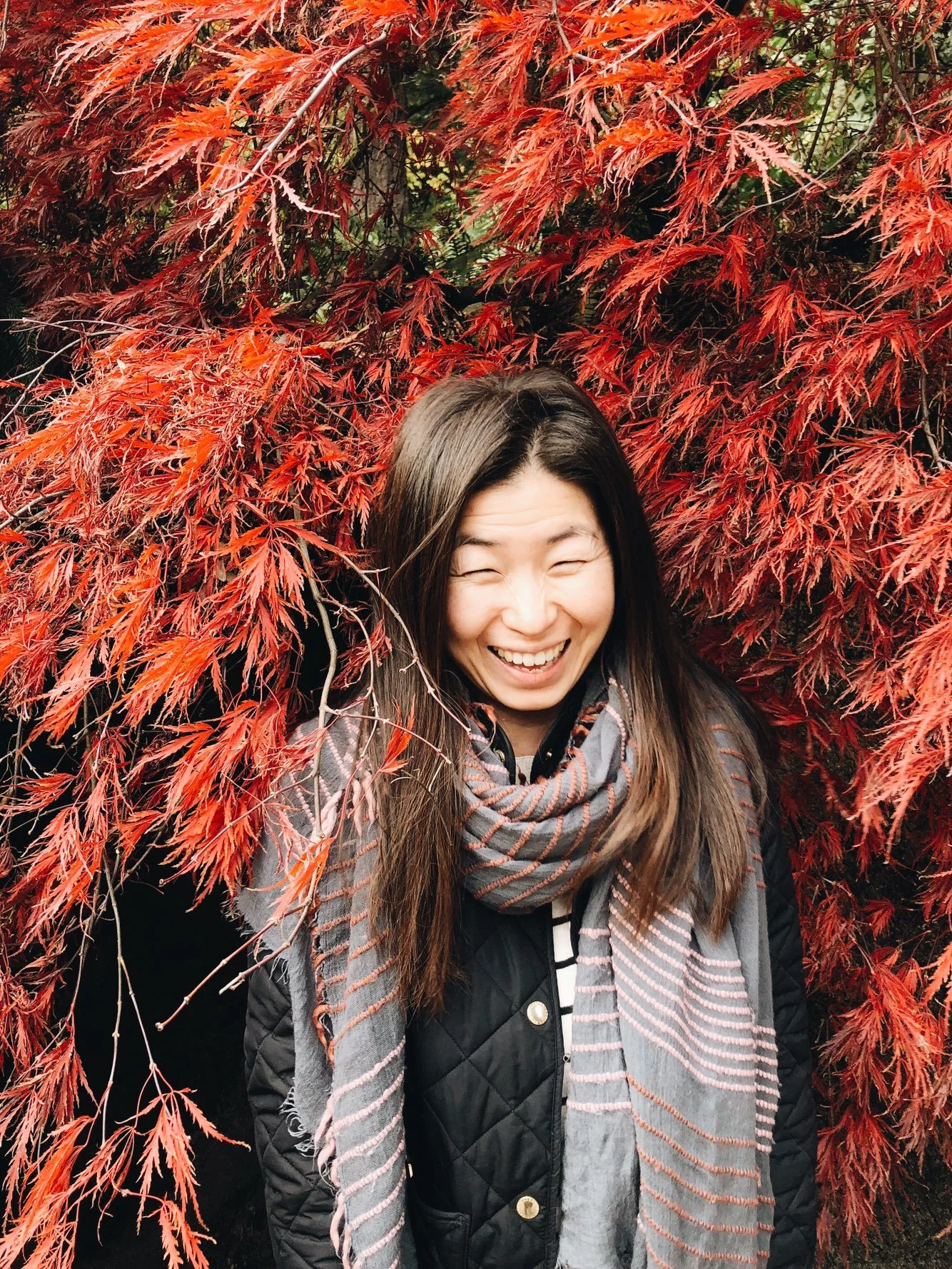
I was sixteen when I came to America with the dream of becoming an artist. I remember packing my watercolor palette and brushes before anything else—immigrating alone to study art and chase a wider horizon than the one I had known in Korea. It wasn't the path many Asian families dreamed of—not doctor, lawyer, or engineer, but an artist. I didn't know yet how disorienting that horizon would be before it became a gift.
Those first years were a storm—a new language, a new culture, and a deep family loss I didn't yet know how to carry. I found myself searching for belonging, purpose, and hope. In the middle of that storm, I met Jesus—not simply as an idea, but as solid ground beneath my feet when I was searching for something that could make sense of life. I gave Him everything I had, and right after graduating from art college, I joined full-time campus ministry.
Art didn't disappear from my life, but it changed shape. My creativity became useful—creating flyers, banners, and promotional materials for ministry. Before long, art for art's sake disappeared, at least within my Asian American faith context. Somewhere along the way, I came to believe that being faithful meant giving myself fully to ministry, while painting and creative work had little place in that calling.
That mindset was shaped in part by the Asian American spiritual heritage that formed me—a faith highly missional, sacrificial, and focused on serving those in need, one I remain deeply grateful for. Yet in a community so oriented toward practical needs, function can easily take priority over beauty.
Those years were filled with ministry work I deeply cared about, but I didn't know how to integrate art into my life and spiritual wholeness. Eventually, I burned out from doing ministry and design work together. I would occasionally pick up a brush, then put it down and return to the busyness of ministry. Art seemed like a luxury when there were so many other things to do.
But my soul kept asking for color and beauty.
Francis Schaeffer asks in Art and the Bible, “What is the place of art in the Christian life?”[1] Christianity, he argues, involves the whole person—intellect, imagination, and creativity. I didn't have the language for that question yet, but I would spend the next two decades living toward an answer.
That struggle began to break open about seven years ago during my Doctor of Ministry program, as I read books on art and theology. Slowly, I began bringing art back into my spiritual formation and ministry and embracing my calling as an artist again. Last year, that practice took a concentrated shape through a hundred small paintings.
100 Days of Hope
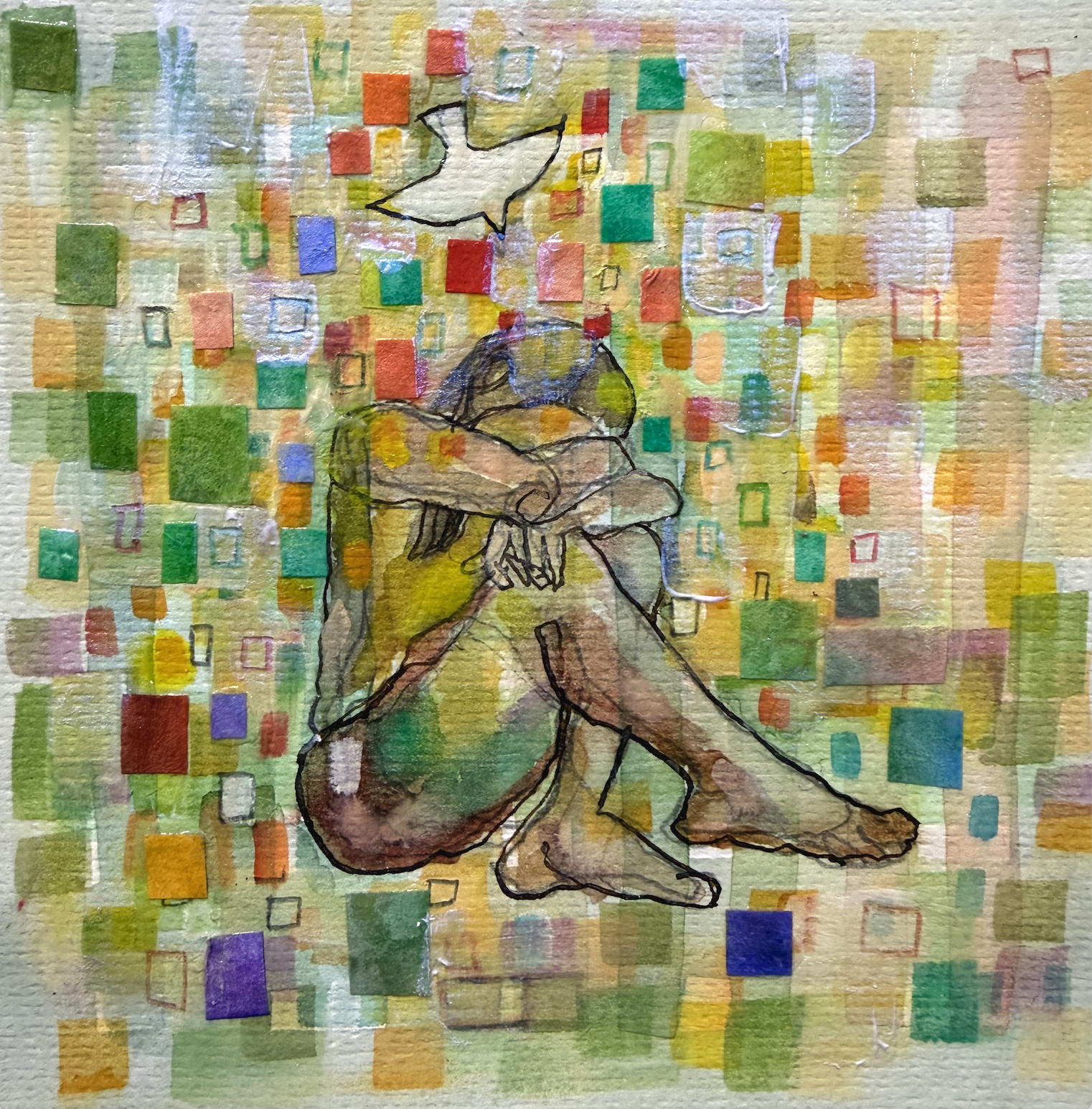
I committed to making one small six-by-six-inch painting every day for a hundred days—no audience, no ministry outcome, just paint, paper, and whatever I wanted to surface, with a bird appearing in each piece.
What surprised me most was how this daily practice began to change me. As I showed up each day to create, I became more attentive to God’s presence. While my hands were making art, God was quietly forming me. Transformation rarely happens in a single dramatic moment; more often, it unfolds through small acts of attention practiced faithfully over time. Across those hundred days, I noticed grief I hadn't named, gratitude I hadn't paused for, and a steadiness that had nothing to do with productivity.
Three things became clear, and I've come to name this movement Art as Presence, Art as Prayer, and Art as Play.
One painting stays with me: Wings of Hope—olive green, warm coral, deep indigo—moving across small colored rectangles against a blue sky. Three birds flying together in a community have taken on many layered meanings for me. From the beginning, birds were symbols of hope, dreams, and freedom for me. By day 100, they had become something more—a quiet sign that God was still there, still moving.
The rectangles did the same work in a quieter way: small and easy to overlook, yet each became a trace of God's presence in the ordinary texture of my days. Looking back, the whole practice became a kind of prayer—my grief and longing slowly lifting me back toward my calling as an artist.
Art as Presence
I have come to experience art as a practice of being present with God. Day after day, my art practice taught me to slow down and notice God's presence in tangible ways—through something I could touch and see, reminding me that God was still there, still making something new out of the fragments of my life.
Art also became a way of meditating on Scripture that engaged the whole person, not the intellect alone. Sitting with a passage and responding through color was not an attempt to illustrate the text, but a way of remaining with the Word rather than moving quickly past it toward interpretation.
Terry Glaspey writes about the importance of attending to the present moment and discovering how ordinary things can awaken us to God's presence.[2] Art does not create God's presence; God is already present. What art offers me is a way to slow down, pay attention, and become attentive to the presence that was there all along.
Art as Prayer
Art can also become a form of prayer—not a replacement for words, but an extension into places language cannot always reach. As I settled into this daily rhythm, I began to experience the process as another language of prayer.
A color can hold grief more honestly than a sentence; a single mark can carry the weight of Here I am, Lord without explanation. This didn't diminish spoken prayer; it extended it. Through the movement of my hands, the attention of my mind, and the stirring of my soul, prayer became embodied.
Art as Play
Alongside presence and prayer, art restored something easily lost in my ministry life: play.
When creativity is tied to usefulness, everything we make needs a purpose. Play interrupts that logic. It asks not, What will this accomplish? but, What might happen if I simply explore? Working without a predetermined outcome creates room for mistakes without turning them into failures. Joy surfaces—not because something useful has been produced, but because nothing has to be.
I have seen this beyond my own practice. In the Art and Faith workshops I lead—including with Korean American and Asian American young adults who, like me, grew up fluent in service but with few models for naming their inner lives—people who would never call themselves artists pick up brushes and find language for things they didn't know how to say.
The Artist and the Minister
Art was never outside God's story. Scripture begins with God creating. When God instructed Israel to build the tabernacle, He called for color, precious materials, craftsmanship, and beauty. He filled Bezalel “with the Spirit of God, with wisdom, with understanding, with knowledge and with all kinds of skills” to make artistic designs and engage in craftsmanship (Exodus 31:3–5). The God who speaks is also the God who creates beauty.
For years, I thought I held two competing callings: artist and minister. I now understand them as one integrated calling. The hands that hold a Bible and the hands that hold a brush belong to the same person, shaped by the same practice: making a mark, pausing, noticing, discerning what comes next, and beginning again.
Perhaps that is what my soul was asking for all those years when it kept asking for color and beauty. It wasn't asking me to leave ministry behind. It was asking me to become whole.
So I want to invite you into the same kind of space. Create a small place for art in your week. Let it slow you down enough to notice where God already is. Bring your honest self there, not the version of you that has everything figured out. And when you create, let yourself enjoy it.
You are not making something for God to approve of. You are creating in the presence of the God who made you creative.
That, too, can be worship.
References
[1] Francis A. Schaeffer, Art and the Bible (Downers Grove, IL: InterVarsity Press, 2006), 1.
[2] Terry Glaspey, Discovering God through the Arts: How Every Christian Can Grow Closer to God by Appreciating Beauty & Creativity (Chicago: Moody Publishers, 2021).