This blog is reposted with permission from AAC at Fuller Seminary.
It is a joy to see Asian Americans celebrate Lunar New Year—known to some as Seollal in Korea, Chūnjié in China, or Tết in Vietnam. For me, this holiday has never been neutral. Growing up in the United States, Lunar New Year carried complex emotions: childhood shame, generational grief, deep cultural longing, and eventually, a Christian faith that would lead me toward restoration and reconciliation—with my identity, my culture, and my ancestors.
What was meant to be a celebration often felt like a mirror, reflecting back the parts of myself I had learned to hide or hate. This reflection is my attempt to tell the truth about that journey—and to reclaim rhythms that have moved me from embarrassment to exuberance, from avoidance to gratitude. Lunar New Year has become a sacred space where memory, faith, and hope collide.
Childhood & Shame
Lunar New Year has always carried a layered weight for me. Growing up in a predominantly white neighborhood and school in Northern California, I wanted desperately to fit in. That meant eating bologna sandwiches instead of the kimbap my mother occasionally packed for lunch. It meant dreading Seollal once January 1st had already come and gone.
Looking back now, I feel the ache of that shame. Lunar New Year meant extended family gatherings, honoring elders and ancestors (at my father’s insistence), navigating unspoken tensions, and learning how to perform respect “correctly.” There was also the quieter pain of watching my father mourn his own childhood—one marked by war, poverty, loss, and immigration. For him especially, Lunar New Year was not simply the passing of time—it carried history in his body.
Across generations, the meaning of the holiday shifted. For my father, Lunar New Year was about preservation—clinging to language, customs, and Korean dignity in a country that often demanded invisibility. For me, it was about survival through assimilation. Fitting in felt safer than remembering.
Faith Conflict
When I was 24, I casually mentioned that it was the Year of the Monkey and that the monkey was my lunar animal. Some friends scoffed. They said they didn’t understand why Asian American Christians insisted on celebrating anything tied to dates, animals, or calendars outside of the Christian tradition.
One friend went so far as to suggest that my celebrations bordered on worshiping false gods. I asked him what day it was. “Tuesday,” he said. I jokingly asked why he continued to commemorate Tiw, the Norse god of war (Tiw’s Day). Or why Wednesday honors Odin, and Thursday honors Thor. If calendar language alone constituted idolatry, we all had a problem.
What was framed as theological purity often felt like cultural erasure.
Theological Reclamation
Over time, I have learned to hold Lunar New Year with more grace—and to hold myself with more generosity. What once felt like obligation has become a joyful choice.
I celebrate not because I must, but because I am remembering all of who I am and how I was created.
Lunar New Year both resonates with and challenges my Christian faith. The tension lies in fear-based elements—the anxiety that one wrong action could doom the year. But the resonance runs deeper. Reverence for elders, blessing over families, communal meals, and the hope of renewal are deeply biblical themes. I also love the mercy of beginning again—especially when the solar new year has already disappointed me. There is something freeing about a second chance at hope.
I have come to appreciate the synergy between the sacred and the secular. Lunar New Year reminds me that time, on this side of heaven, is liminal and imperfect. It draws my attention to lost languages, half-remembered customs, and ancestral stories that were never translated—but still deserve to be honored and passed on, even as I grieve what did not survive an individualistic culture.
For me, Lunar New Year has become a quiet liturgy. God works through memory, through meals, through imperfect families trying again. Renewal does not require forgetting the past, but honoring it honestly. The new year reminds me of who I am—and whose I am. Lunar New Year does not compete with my Christian faith; it deepens it, grounding grace not only in doctrine, but in lived experience as an Asian American Christian.
새해 복 많이 받으세요.
Happy New Year.
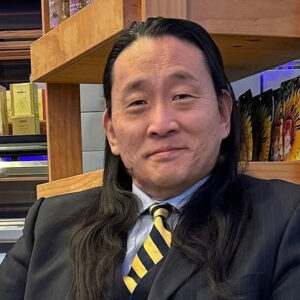
Dr. Alexander Jun is co-founder of Khora Collective and serves as Chief of Strategic Partnerships. He is Director of Intercultural Development at Serge as well as Research Professor of Korean American Ministries and Church Leadership Studies at Fuller Theological Seminary. He was the founder and executive director of the Korean American Leadership Initiative (KALI) and 45th Moderator of the Presbyterian Church in America (PCA). Alex has published multiple books and articles on racial justice issues in the church, education, and broader American society and holds a PhD from University of Southern California. He and his wife live in Los Angeles County and have 3 children.